
The Missing Link in Innovation: Why "Adoption Capacity" Matters More Than the Technology Itself

Dr Ruchi Saxena

The most important question in innovation is not: “Can we build it?”, it is: “Can people, institutions, and communities use it safely, equitably, and consistently when it matters?” In health systems, food systems, and climate resilience, the gap between technical promise and sustained public value is rarely closed by technology alone. It is closed by adoption capacity. This article addresses exactly this point of interchange.
Artificial intelligence (AI), drones, robotics, sensors, and decision-support platforms are increasingly presented as solutions to complex societal challenges. An algorithm might help identify disease risk; a drone might map a flood-affected settlement or assess crop stress; a robotic or automated system might reduce drudgery, improve timeliness, or optimize resource use. These are meaningful possibilities. But a promising prototype, a well-funded pilot, or an impressive demonstration is not the same as a functioning system.
The distinction matters because health, food, and climate are interdependent systems. Climate hazards affect water, livelihoods, food production, nutrition, infectious disease patterns, health-service demand, and the reliability of infrastructure. Food insecurity can contribute to malnutrition and worsening health outcomes, while health crises can reduce labour capacity and strain household resilience. A technology deployed in one domain can therefore create benefits, or risks, across several others. The institutional arrangements to govern it must be equally connected.
My central argument is whether innovation should be treated as a capability-building challenge before it is treated as a procurement challenge. Governments, development partners, health providers, agricultural institutions, technology firms, and communities need the ability to assess needs, choose appropriate tools, govern data, build workforce confidence, manage risks, evaluate outcomes, and adapt over time. Without these capabilities, scaling often means scaling fragility.
The Pilot Paradox in Building Adoption Capacity
Across sectors, we have become comfortable with the language of disruption and pilots. A pilot can be valuable: it can test feasibility, identify workflow barriers, build evidence, and reveal unintended consequences before major investment. But pilots also create a dangerous illusion of progress... for example, a drone flight over a field, a dashboard shown to district officials, or a chatbot trial in a health facility can demonstrate that a tool works under controlled conditions. However, it does not demonstrate that the tool belongs in the system.
For a technology to become routine, many questions must be answered:
Who owns it?
Who maintains it?
Who pays for connectivity, replacement parts, calibration, data storage, insurance, cybersecurity, and training?
What happens when the model performs poorly, a drone is grounded, electricity fails, data are incomplete, or staff turnover occurs?
Who is accountable when an automated recommendation influences a consequential decision?
Which groups may be excluded because of language, digital access, disability, cost, geography, or lack of formal land or health records?
The World Health Organization (WHO) cautions against overstating the benefits of AI in health, particularly where attention to AI may displace core investments needed for universal health coverage. Its guidance emphasizes that health AI requires human autonomy, safety and public interest, transparency, accountability, equity, and sustainability, not merely technical accuracy.
This is an important corrective to technological optimism. In a district health system with inadequate staffing, unreliable referral pathways, weak data quality, or essential medicine stock-outs, an AI tool cannot substitute for the institutional basics of care. It may augment them, but it cannot replace them. [caerobotics](https://www.caerobotics.com/learn)
The same principle applies in agriculture and food systems. The Food and Agriculture Organization of the United Nations (FAO) defines agricultural automation broadly as machinery and equipment that improves diagnosis, decision-making, or task performance, potentially reducing drudgery and improving the timeliness and precision of farm operations. The key word is *potentially*.
Benefits depend on the context in which automation is introduced: affordability, connectivity, repair ecosystems, secure access to land and finance, extension support, farmer trust, and the distribution of costs and gains.
A useful question is therefore not “Is this technology advanced?” but “Does this technology solve a priority problem in a way that the local system can sustain?”
A Systems Problem, Not a Siloed One
Climate change intensifies the need for systems thinking. The WHO’s operational framework for climate-resilient and low-carbon health systems aims to help the health sector address climate-related risks, strengthen health-system functions, reduce emissions, and clarify responsibilities for decision-makers. This framing is valuable because it moves the debate beyond emergency response. Resilience is not simply the ability to react after disruption; it is the capability to anticipate, absorb, adapt, and continue providing safe and quality services.
Consider a hypothetical flood-prone district. Satellite data and drones could support mapping of standing water, damaged roads, crop loss, or isolated settlements. AI-enabled analytics might integrate weather forecasts, surveillance data, and service-delivery information to identify potential risks to food supply, vector-borne disease, or disrupted maternal-health access. These tools could be useful. Yet their impact would depend on whether the district has clear decision protocols, interoperable data systems, trained staff, community communication channels, referral transport, emergency stocks, and a budget that can support action.
The technology may reveal a risk. The system must still respond to it.
This is why cross-sectoral governance is essential.
Climate, agriculture, disaster management, public health, veterinary services, water, local government, civil aviation, and digital ministries often operate with separate mandates, funding streams, datasets, and regulatory requirements.
A drone programme for agricultural surveillance may require aviation permissions and data rules.
A health-risk prediction platform may need privacy safeguards, clinical validation, and public-health reporting pathways.
A joint climate-health-food early-warning system requires agreements about data sharing, interpretation, authority, and accountability.
Interoperability is an institutional and relational matter. It concerns whether people who hold different responsibilities can collaborate around a shared public purpose.
FAO’s work on digitalization in agricultural value chains similarly highlights the need for enabling conditions: policy, regulation, infrastructure, organizational arrangements, and sociocultural change. It also identifies unresolved concerns around data governance, cybersecurity, worker rights, and the confidence of farmers and consumers. The lesson is, if communities lack trust in how data will be collected, used, shared, or monetized, adoption will remain shallow regardless of technological sophistication.
From Technology Transfer to Capability Transfer
Many innovation initiatives still implicitly follow a technology-transfer model: identify a problem, select a solution, procure it, train users briefly, and measure short-term uptake. This sequence is appealing because it is visible and measurable. It generates announcements, demonstration days, and procurement milestones.
But complex public systems require a capability-transfer model instead.
Capability transfer begins with problem definition, not product selection. It asks frontline workers, farmers, patients, community organizations, local administrators, and technical specialists what is currently difficult, unsafe, costly, delayed, or inequitable. It examines the existing workflow before attempting to digitize or automate it. It distinguishes between a genuine need and an externally imposed use case.
For instance, a crop-monitoring drone may be technically capable of detecting stress patterns. But a smallholder farmer may need a trusted, affordable, actionable advisory service rather than raw aerial imagery. If imagery is delivered without interpretation, if recommended inputs are unavailable, or if the farmer cannot bear the financial risk of acting on the advice, the technology has not solved the real problem. It has shifted complexity onto the user.
Likewise, an AI clinical decision-support tool should not be introduced merely because it can generate risk scores. It should be tested against actual clinical workflows:
Who enters the data?
When is the recommendation visible?
Can a clinician understand its basis?
Is there a clear escalation pathway?
Does it add cognitive burden or reduce it?
Can patients ask questions or challenge decisions?
Does it perform adequately for the populations served?
WHO explicitly notes that AI systems developed mainly using data from high-income settings may not perform well in low- and middle-income contexts, and it calls for digital skills development, workforce retraining, and community engagement. These are not peripheral concerns. They are central determinants of safety, legitimacy, and long-term use.
Capacity building must therefore extend beyond basic digital literacy.
It should include:
- Problem-framing capability: defining a public need with affected communities rather than beginning with a vendor solution.
- Data capability: understanding data quality, consent, privacy, interoperability, bias, and access rights.
- Operational capability: embedding technology in workflows, maintenance plans, escalation protocols, and quality-improvement cycles.
- Governance capability: assigning responsibility for procurement, oversight, complaints, incident reporting, and periodic reassessment.
- Financial capability: estimating total cost of ownership—not simply purchase price—and creating realistic financing and replacement plans.
- Evaluation capability: measuring meaningful outcomes such as equity, timeliness, safety, service continuity, farmer income stability, reduced drudgery, or environmental impact.
This approach may seem slower at the beginning. In practice, it is often faster than repeatedly replacing failed pilots.
Governance Must Be Designed for Real Life
Governance is often misunderstood as a barrier to innovation. Poorly designed governance can indeed be slow, fragmented, or excessively compliance-focused. But the alternative is not faster innovation; it is unaccountable innovation.
Good governance creates the conditions in which useful innovation can be trusted. It defines decision rights, safeguards, reporting mechanisms, standards of evidence, and redress when harm occurs. It also makes clear that technology should remain accountable to public goals, rather than allowing public systems to become dependent on opaque commercial systems.
For AI in health, WHO’s six guiding principles offer a practical foundation: protect human autonomy; promote well-being, safety, and the public interest; ensure transparency, explainability, and intelligibility; foster responsibility and accountability; ensure inclusiveness and equity; and promote responsiveness and sustainability. These principles can also inform AI applications in food and climate systems.
Take the principle of human autonomy. In health care, it means patients and professionals should not be reduced to passive recipients of automated decisions. In agriculture, it means farmers should not lose agency over their farm data or be pressured into platforms whose terms they cannot negotiate. In disaster response, it means communities should not be subjected to aerial surveillance without clear justification, safeguards, and channels for accountability.
Similarly, sustainability should be interpreted broadly. It includes environmental sustainability: energy use, electronic waste, battery disposal, and the environmental footprint of digital infrastructure. But it also includes institutional sustainability: whether the tool can continue safely after a grant ends, a vendor exits, or a political priority changes.
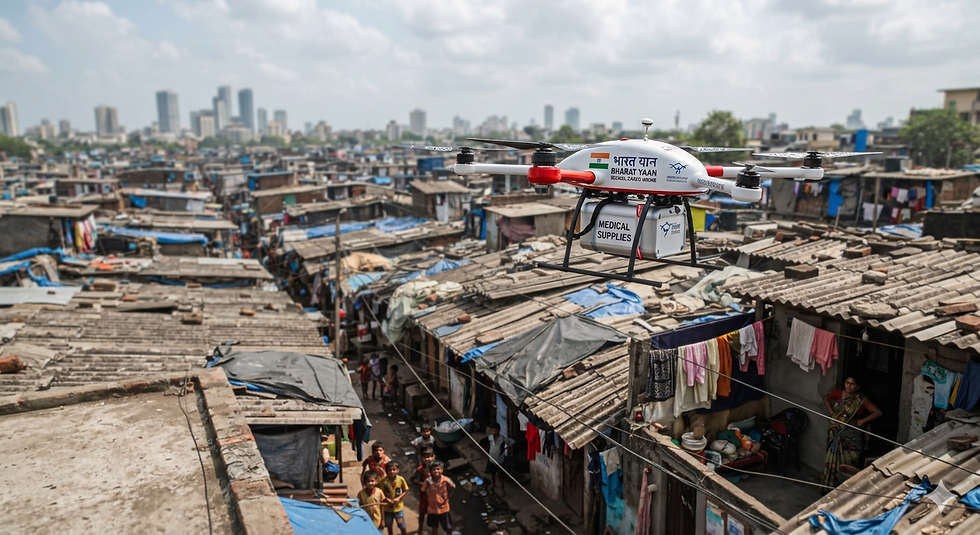
Drones provide a useful example. FAO and the International Telecommunication Union (ITU) have documented their applications in agriculture, including crop monitoring and related information services. Yet responsible drone adoption requires more than a capable aircraft. It requires aviation compliance, safe operating procedures, pilot competency, maintenance systems, weather protocols, privacy safeguards, public communication, and clear boundaries on data use. A drone that cannot be maintained locally, flown lawfully, or linked to a decision pathway is not a resilience asset. It is an expensive demonstration.
The Equity Test
An innovation that works only for the best-connected, best-resourced users is not necessarily a failed innovation. But it is not an equitable public-system innovation either.
Digital technologies can widen existing inequalities when they rely on smartphones, high literacy, stable internet, formal records, credit access, or expensive equipment. FAO notes that small farmers in rural areas can be disproportionately disadvantaged in access to infrastructure, networks, education, and technology. These barriers should shape programme design from the outset.
The equity test requires us to ask:
Who benefits first?
Who pays?
Who bears the risk when the tool fails?
Who is missing from the training dataset?
Who cannot access the interface?
Who owns the data?
Who has the power to challenge a decision?
Sometimes the most responsible design is not the most automated option. It may be a hybrid model in which technology supports trained local workers, extension agents, nurses, community health workers, or farmer cooperatives. It may require offline functionality, multilingual interfaces, shared service models, subsidized access, or non-digital alternatives. It may mean deciding that a tool is not appropriate until foundational infrastructure improves.
This is not anti-technology. It is pro-public value.
A Different Definition of Scale
Scale is often described in numerical terms: number of users, devices deployed, districts reached, data points collected, or transactions completed. These indicators can be useful, but they do not tell us whether a system has become more capable, fair, or resilient.
A more meaningful definition of scale is "the sustained ability of a system to deliver value safely and equitably across diverse conditions". By this standard, scaling means local institutions can operate, adapt, govern, and finance the innovation without permanent external dependence. It means a tool continues to serve people during staff turnover, climate shocks, budget constraints, and changing needs.
The future of health, food, and climate innovation will not be decided by whether AI, drones, or robotics become more powerful. They almost certainly will. The more important question is whether our institutions become wise enough to use them well.
That calls for a new professional capability: people who can bridge policy and practice; speak with technologists, clinicians, farmers, communities, regulators, and financiers; and turn abstract principles into operational systems. It calls for education that treats governance, implementation, ethics, and community partnership as core technical competencies—not optional “soft” additions.
The real innovation challenge is not to make technology appear in a clinic, a farm, or a disaster-response programme. It is to create the human, institutional, and ethical conditions in which it can contribute to durable public benefit. When we build adoption capacity, technology becomes a tool in service of resilience. When we neglect it, even the most impressive innovation risks becoming another pilot that never learned how to belong.
Dr Ruchi Saxena is the Founder-Director of Caerobotics, an alumnus of University of Oxford, and a Chevening Scholar. She works for the integration of innovations for resilient health systems.
References
1. World Health Organization. *Ethics and governance of artificial intelligence for health: WHO guidance*. Geneva: World Health Organization; 2021. Available from: [https://www.who.int/publications/i/item/9789240029200](https://www.who.int/publications/i/item/9789240029200) [who](https://www.who.int/publications/i/item/9789240029200)
2. Food and Agriculture Organization of the United Nations. *The State of Food and Agriculture 2022: Leveraging automation in agriculture for transforming agrifood systems*. Rome: FAO; 2022. Available from: [https://www.fao.org/newsroom/detail/FAO-state-of-food-and-agriculture--SOFA-2022-automation-agrifood-systems/en](https://www.fao.org/newsroom/detail/FAO-state-of-food-and-agriculture--SOFA-2022-automation-agrifood-systems/en) [fao](https://www.fao.org/newsroom/detail/FAO-state-of-food-and-agriculture--SOFA-2022-automation-agrifood-systems/en)
3. World Health Organization. *Operational framework for building climate resilient and low carbon health systems*. Geneva: World Health Organization; 2023. Available from: [https://www.who.int/publications/i/item/9789240081888](https://www.who.int/publications/i/item/9789240081888) [who](https://www.who.int/publications/i/item/9789240081888)
4. Food and Agriculture Organization of the United Nations. *Scaling up inclusive digitalization in agricultural value chains*. Rome: FAO; 2021. Available from: [https://openknowledge.fao.org/server/api/core/bitstreams/f0152ea2-4c44-47d2-9939-5f8cc0ea0e6f/content](https://openknowledge.fao.org/server/api/core/bitstreams/f0152ea2-4c44-47d2-9939-5f8cc0ea0e6f/content) [who](https://www.who.int/news/item/09-11-2023-who-unveils-framework-for-climate-resilient-and-low-carbon-health-systems)
5. Food and Agriculture Organization of the United Nations, International Telecommunication Union. *E-agriculture in action: drones for agriculture*. Rome: FAO; 2018. Available from: [https://openknowledge.fao.org/items/9771e773-0850-4ca5-af74-6271473d470a](https://openknowledge.fao.org/items/9771e773-0850-4ca5-af74-6271473d470a)[14][15]
6. Food and Agriculture Organization of the United Nations. *Digital technologies in agriculture and rural areas: status report*. Rome: FAO; 2019. Available from: [https://openknowledge.fao.org/handle/20.500.14283/ca4887en](https://openknowledge.fao.org/handle/20.500.14283/ca4887en)[16]


Comments